Hi Kellogg
We are New Mexico based technologists and doulas who want to improve digital pregnancy education
Why digital pregnancy education?
As a doula in New Mexico, almost every young person I’ve worked with had a pregnancy app, and really relied on it. But the information in these apps was so often inaccurate, poorly timed, riddled with diaper ads, poorly designed, and increased anxiety without adding anything to their pregnancy. I’d often see people with important questions for their provider, but they didn’t know how to ask them in 10-15 minute prenatal appointments. Because they weren’t sure how to ask, they would show up to birth with long birth plans their provider had never seen.
I’ve also seen how these apps fall away completely in cases of loss, leaving people without support when they need it most. I’ve seen how they leave out any kind of space for cultural context. There are better tools, but they tend to be locked behind insurance or hospital systems, making them inaccessible to most.
As a full spectrum doula and an ex Apple designer, I am absolutely certain we can do better than this. I want to build a tool that helps you build birth preferences, makes communicating with your provider feel simpler, includes partners, and gives real, evidence based information on childbirth.
Whats the problem?
-
More than 50% of pregnant women use at least one pregnancy app, but in a 2024 review of 35 leading apps, 22 of 35 showed ads, and 15 of 35 used affiliate links. User reviews complained about pop up ads, and selling personal information. In a broader review of popular women’s health apps, 87% shared user data with third parties. And while trivia based features are standard, education isn’t. While most pregnancy apps include a fetus size comparison (your baby is the size of a grapefruit) only 2 included birth classes.
-
Digital childbirth education is long form and web first, videos, PDFs, and websites. The oldest Gen Z adults are 29 in 2026, and the U.S. mean age at first birth is 27.5. Gen Z are todays first time parents.But young adults now access health information in mobile first ways, especially through social media, phones, and apps, not just desktop style longform web content. Studies of Gen Z and young millennials show a preference for short, modern content with more interactive features.
-
In one recent study, childbirth class attendance was 76.1% among people not in poverty, compared with 35.3% among those living in poverty.Attendance was 74.4% among White non Hispanic participants, versus 30.1% among Black non Hispanic participants and 50.0% among Hispanic participants.Earlier research similarly found that the “typical” childbirth class attendee was more likely to be white, partnered, privately insured, and higher income.
-
Routine prenatal visits are commonly only 10-15 minutes, and even specific counseling conversations can be far shorter. One study found prenatal screening discussions lasted an average of 1.5 minutes. At the same time, the CDC found that 44.7% of mothers reported holding back from asking questions or discussing concerns during maternity care. Evidence on question prompt lists shows they can increase the number of questions patients ask and improve engagement in shared decision making.
-
Support from partners and other close support people is associated with meaningful benefits in pregnancy, including earlier prenatal care, lower anxiety, and fewer depressive symptoms. At the same time, the current app market rarely reflects that reality: in a 2024 review of 35 leading pregnancy apps, only 3 included a partner or family account. In other words, one of the most important parts of pregnancy support is often treated as an afterthought in digital design, even though birth preparation, decision making, and postpartum adjustment rarely happen alone.
-
In a 2024 review of 35 leading pregnancy apps, only 3 offered multilingual support, meaning most pregnancy education tools still assume an English speaking user. That is a major gap for families who need to learn, ask questions, and prepare for birth in the language they use at home. In New Mexico, that gap matters not only for Spanish speaking families. A 2025 WIC study found preferred languages among participants included Apache and Diné bizaad, alongside Spanish and English.
-
Pregnancy tech is often built around an idealized, uncomplicated pregnancy, and that leaves many experiences out.In one analysis of 166 pregnancy related apps, 72% did not account for pregnancy loss at all, 18% allowed users to report a loss but offered no meaningful support, and only 10% provided even passive links to resources. That means many apps stop supporting users the moment a pregnancy becomes more complex.
What do we want to do differently?
-
Most people make their birth plan all at once, late in pregnancy, and the first time their provider sees it is when they are in labor. we want to help you build birth preferences gradually as you learn, so by the time you are nearing your due date, everyone is on the same page.
-
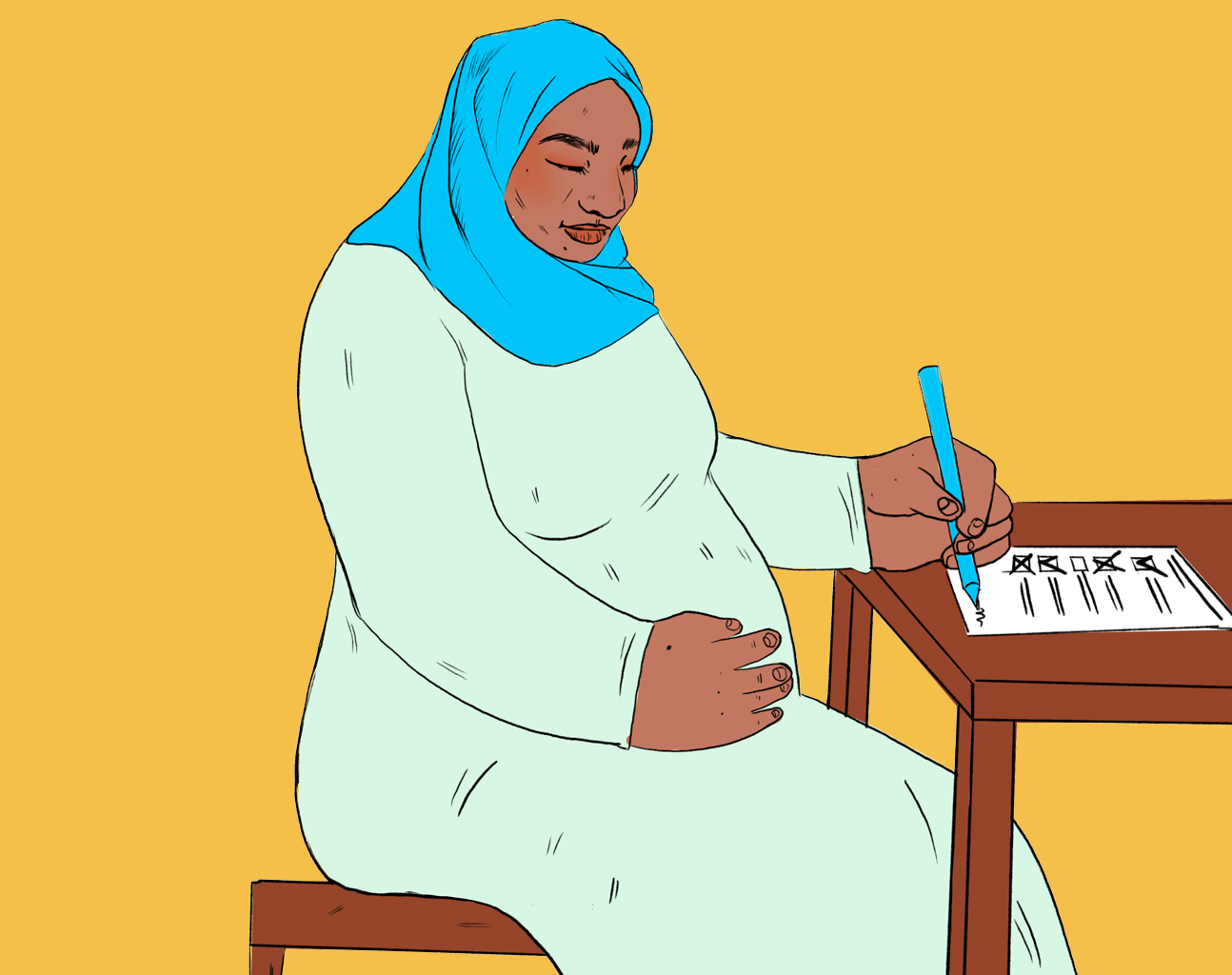
Patients often leave prenatal visits with unanswered questions, not because they don’t have them, but because it’s hard to know what to ask in a short appointment. Research shows that structured question lists provided at the right time help patients ask more questions and feel more confident in their care. We would build this directly into the experience, helping users save and organize questions as they learn, so they can walk into appointments prepared with a list and actually get the information they need.
-
We want to build something that considers partners from the beginning. Letting users choose what to share, like birth plans, having specific content for their unique transition to parenthood, and doing activities like shared question prompts to prepare for the baby.
-
We want to start with professional Spanish translation of content from the moment we ship. Many other apps use automatic translation, and in the context of birth, we dont think this is enough. We also want to invest in research and development around future Diné Bizaad support in partnership with community members in New Mexico. From our work on Yeigo, a Diné Bizaad AR mobility-aid prototype developed with technologist Akilah Martinez, we know this kind of language work is complex. Our goal is to launch with Spanish availability from the start, and then do the appropriate research and community collaboration to determine how Diné language support could potentially be approached, and who would be the appropriate lead.
-
We want all content making medical claims to have appropriate medical review- whether thats from a nurse midwife, an MD, a dietician, or a physical therapist.
-
We want to offer units for black parents, indigenous parents, and queer parents. In addition, we would love to have units for young parents, folks experiencing substance use, and folks experiencing HIV. These units would be made by subject matter experts with lived experience.
-
Instead of asking people to sort through generic articles, trivia, or advice that might not be relevant yet, we want to give you a Duolingo style learning path that surfaces the right information at the right time, letting you learn about upcoming decisions, provider conversations, and birth preferences when those topics are most useful.
-
If you tell us you've experienced a miscarriage or stillbirth, we want to have a support path for you.
-
We want to teach a simple decision making frame work widely used by doulas known as BRAIN, Benefits, Risks, Alternatives, Intuition, and doing Nothing or Next Steps. This approach mirrors the core components of informed consent in medicine, and gives you a clear structure for asking questions while creating space for personal values and instincts.
-
We want something that is short form, mobile first, engaging, interactive, and personalized. We need to meet todays parents where they are at, with the information delivery methods they are most comfortable with.
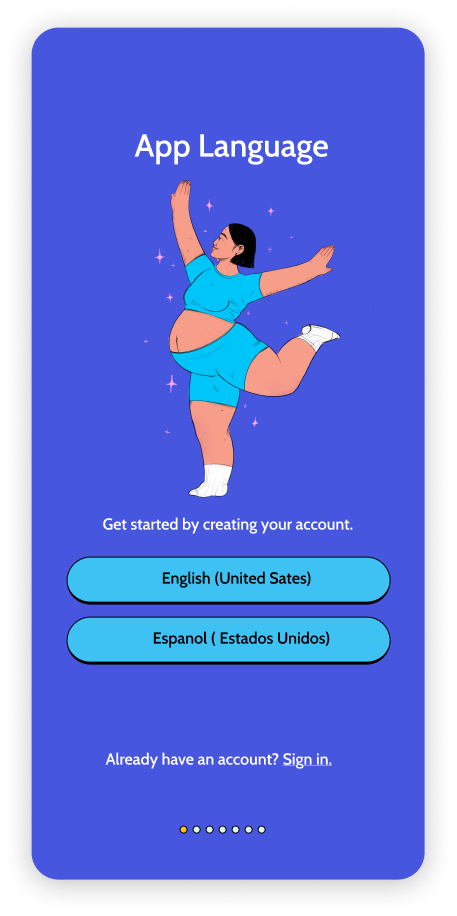
Start by choosing your language, Spanish or English
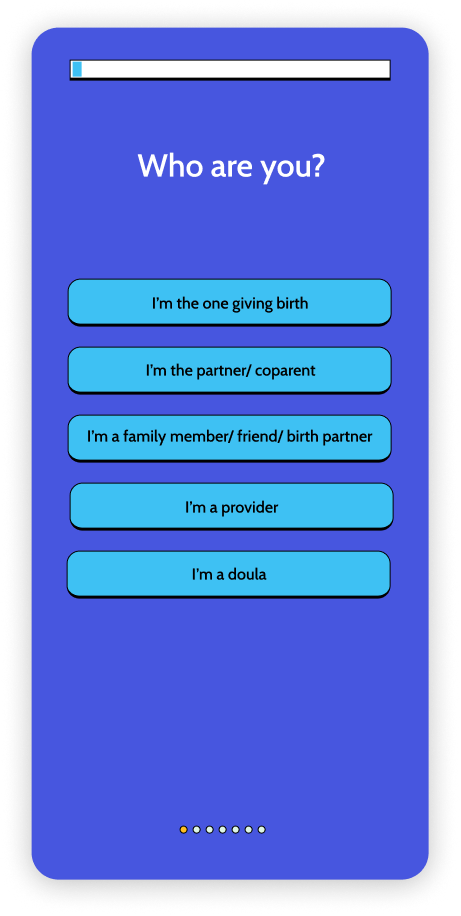
Let us know who you are. There will be special modules for partners, and the ability to view birth plans for people like doulas.
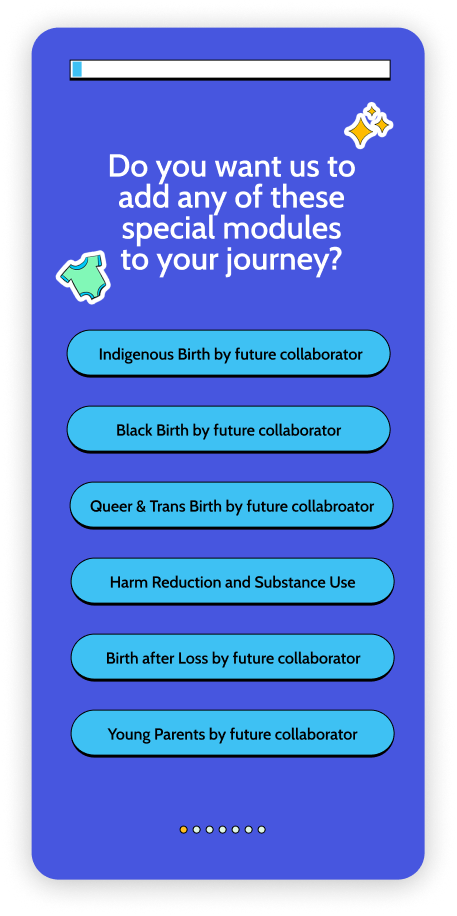
add special modules that are specific to your pregnancy experience
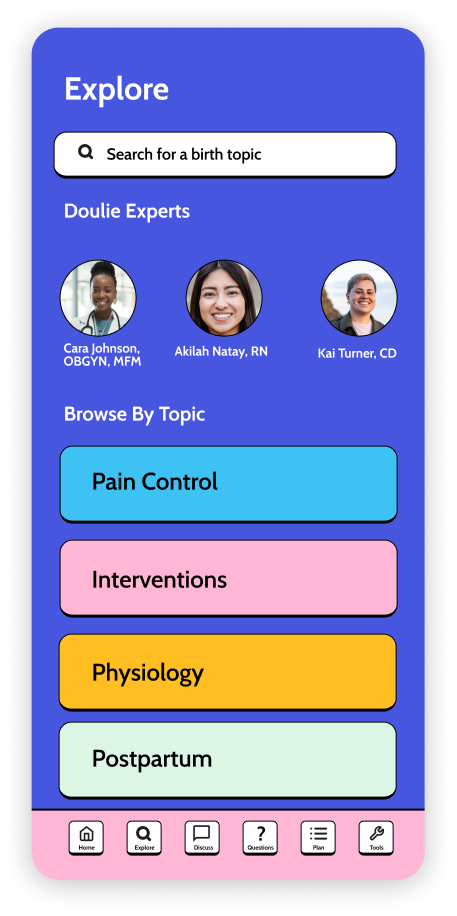
explore modules- you can search by writer, or by material type
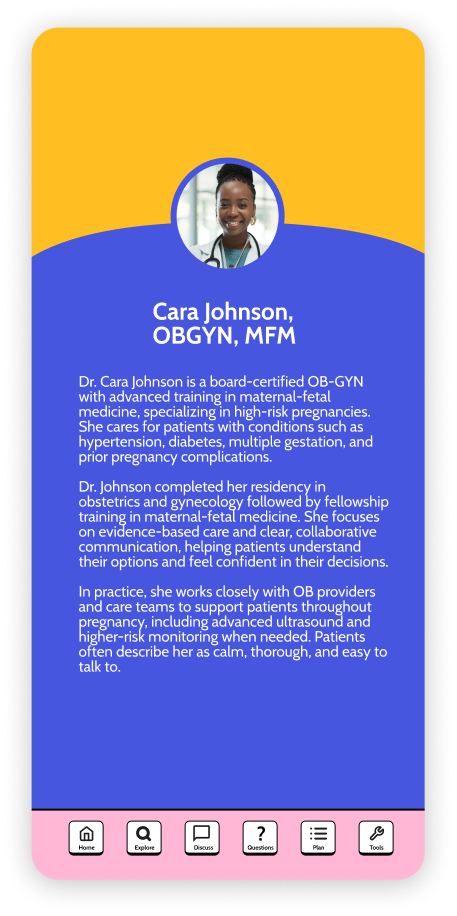
learn about who approved and wrote the material
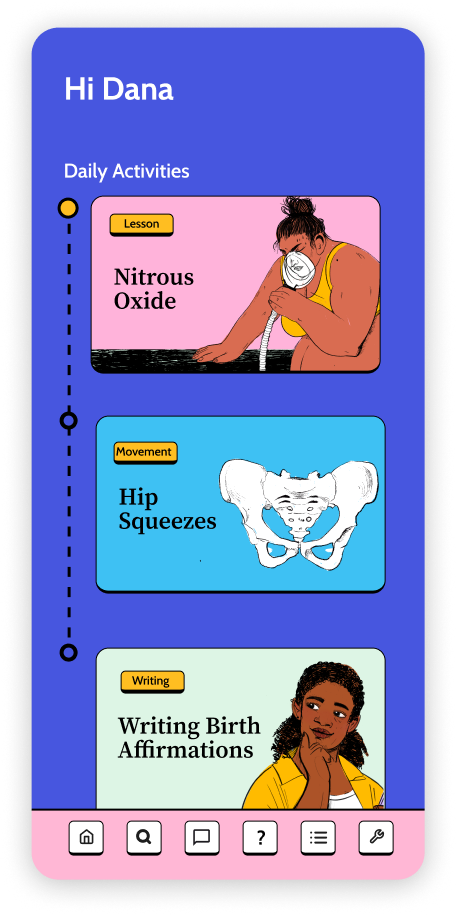
a duolingo style path will choose your learning modules based on what week of pregnancy you are in. skip around at any time.
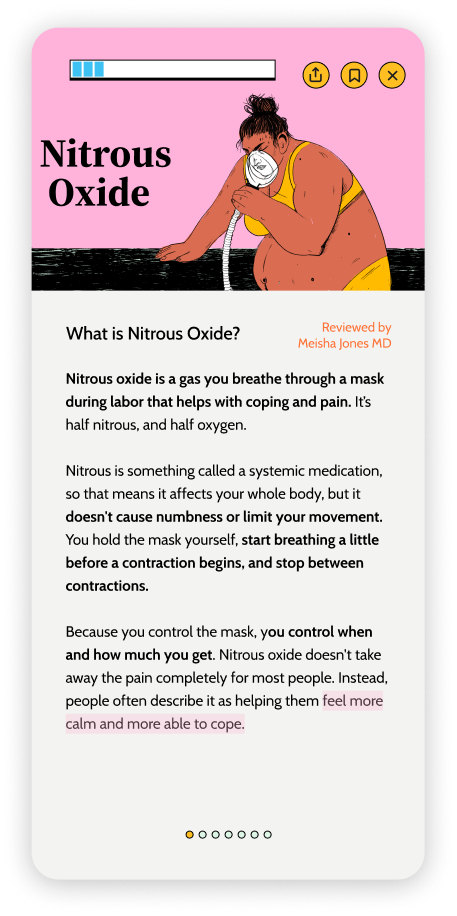
a module starts with a simple explanation of the intervention, reviewed by a provider
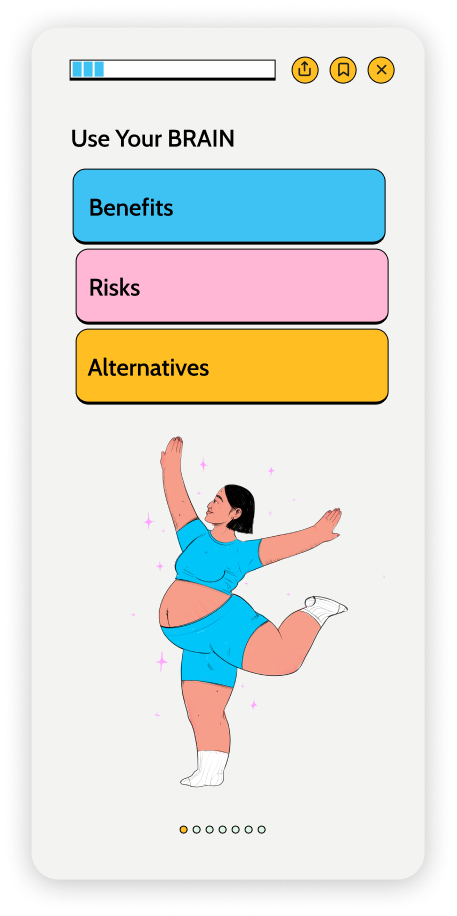
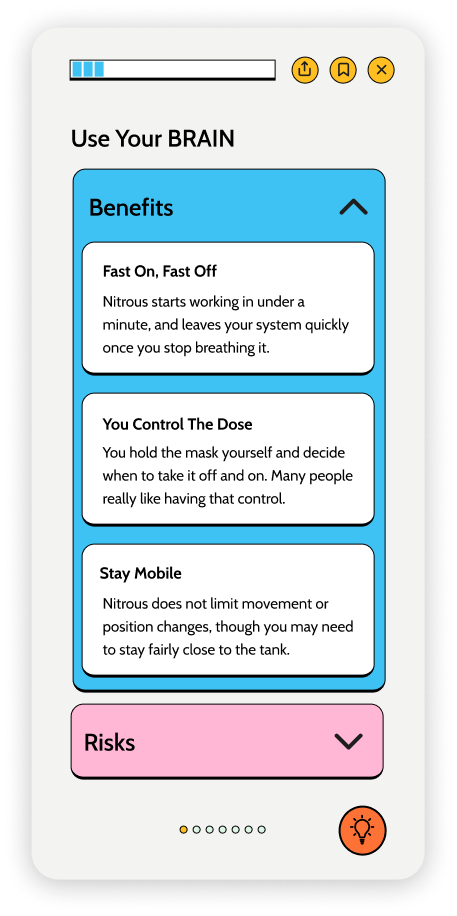
on the next screen, read through the surface level benefits, risks, and alternatives to a particular intervention
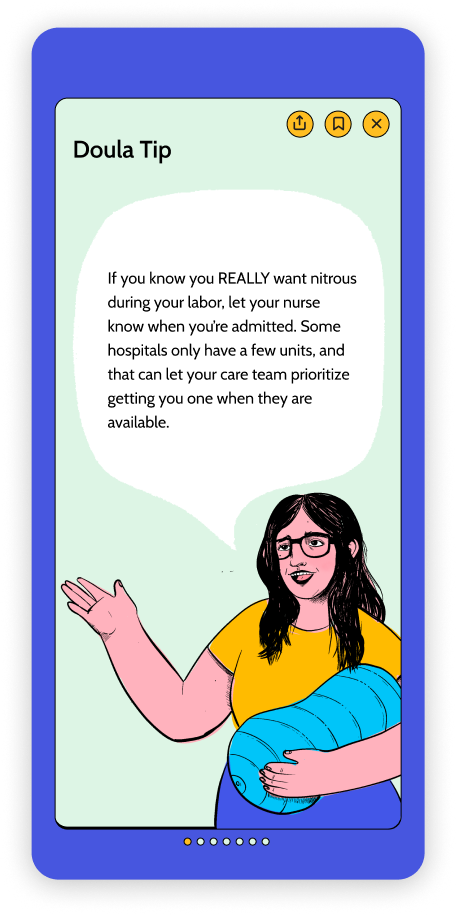
Get tips from various birth workers in their voice. Maybe a tip from a nurse or doula about navigating asking for something at the hopsital, or a tip from a physical therapist about how to get the most out of a PT appointment for your pelvic floor.
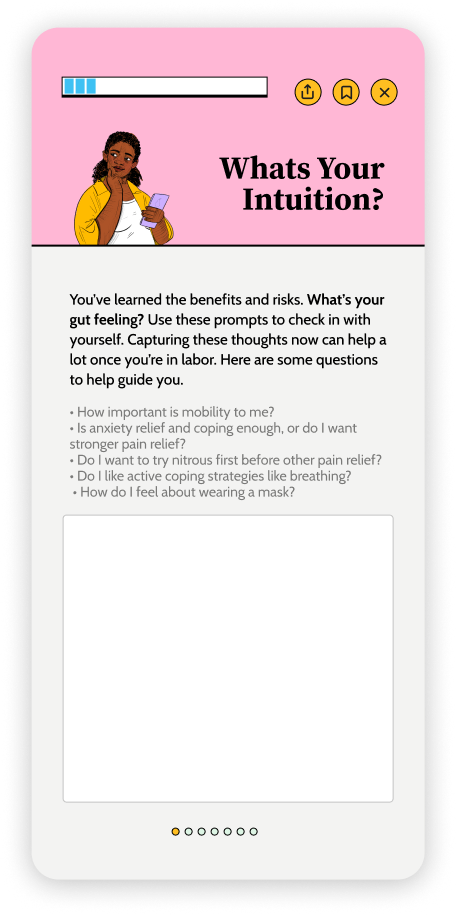
record your intuition on an intervention early, so if it comes up in the moment, you can read your thoughts from before
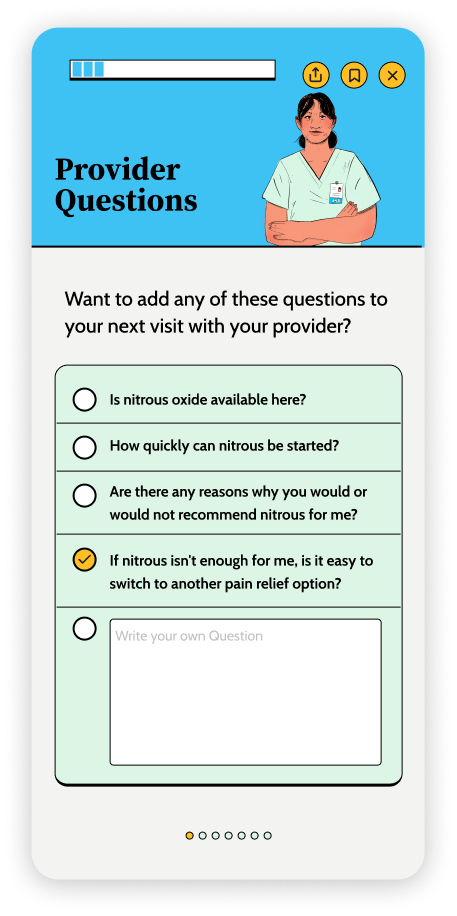
add questions in a list for the next time you see your provider.
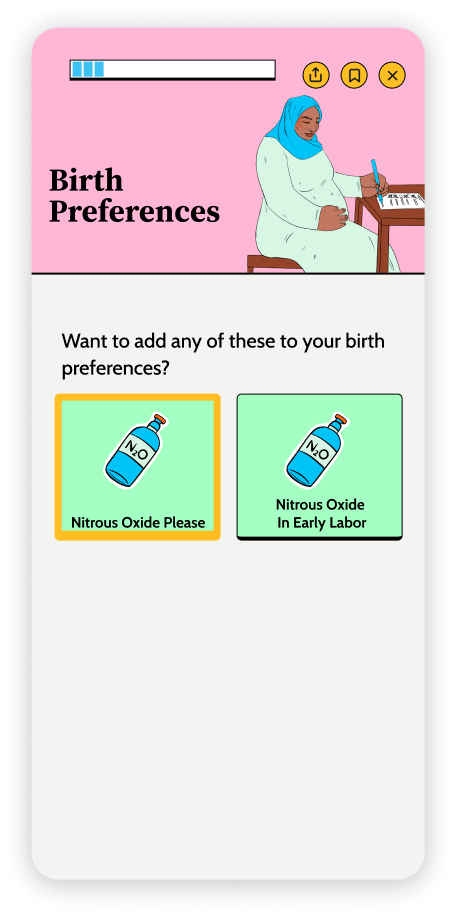
after reading a module, show things you could potentially add to your birth preferences once you've read it.
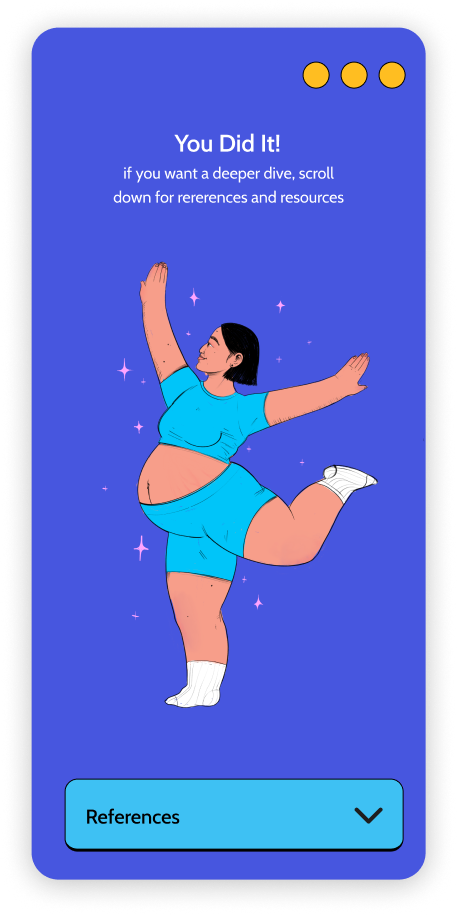
At the final screen, include references and further reading if you want to learn more.
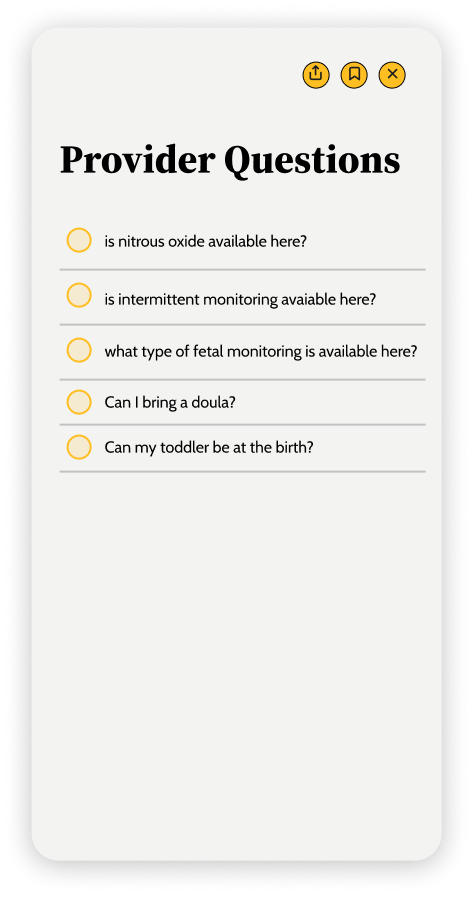
pull up a simple list of your questions from the week at the appointment on your phone
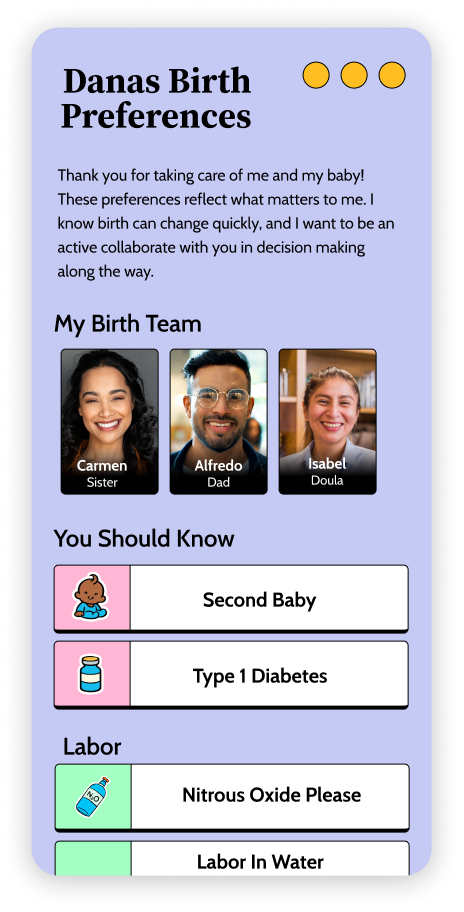
birth preferences are an organized list, that can be exported as a pdf when the time comes. the birth preferences include regular check in suggestions, to review your preferences with your provider.
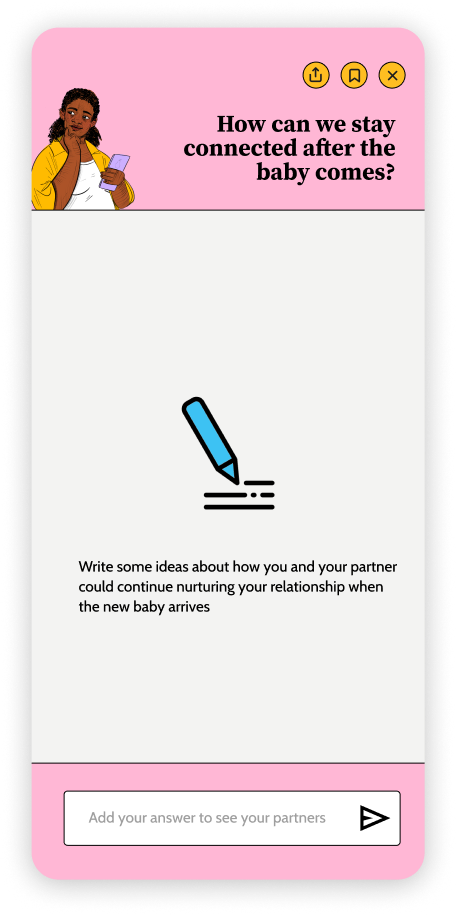
activities with your partner include answering questions together. Answer the question in order to see your partners answer
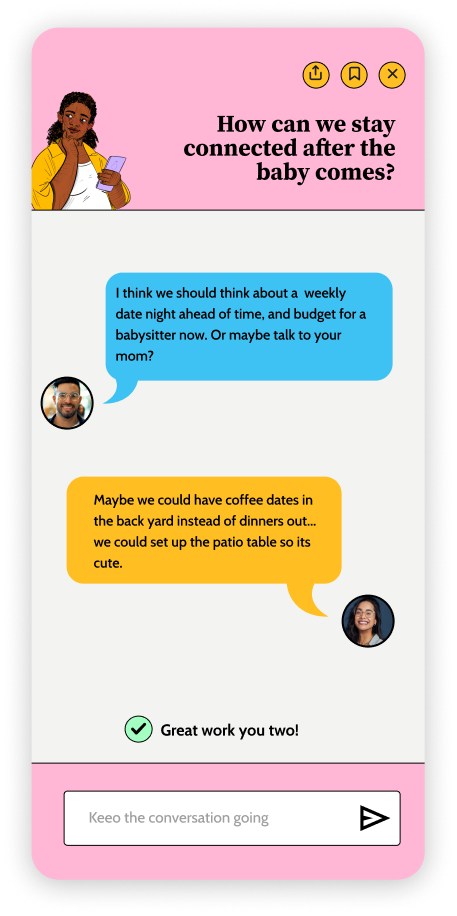
question answer are saved to review together later
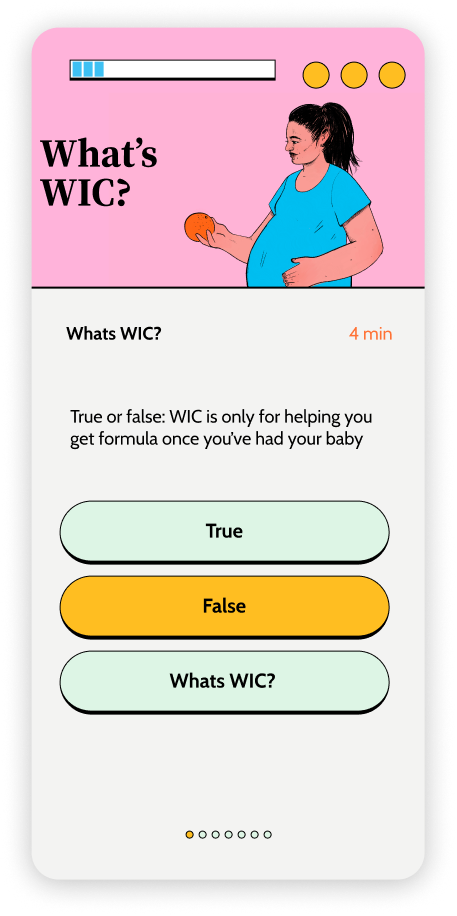
Material would include non intervention material such as WIC
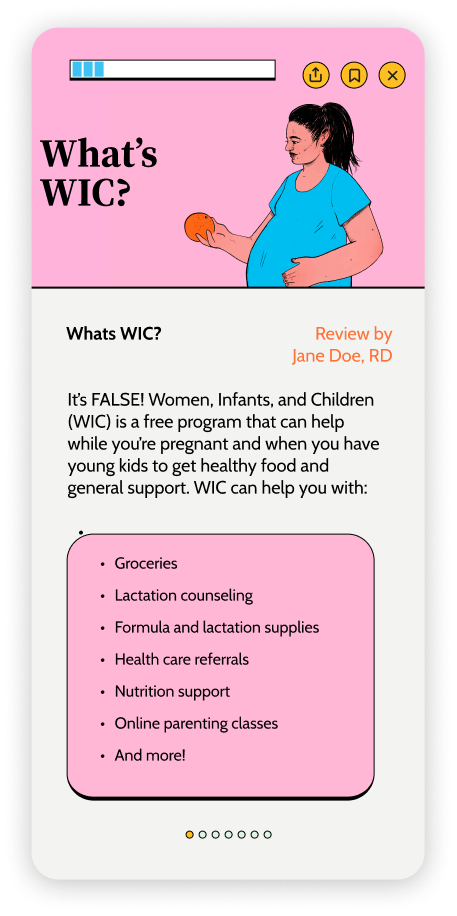
modules are bite sized
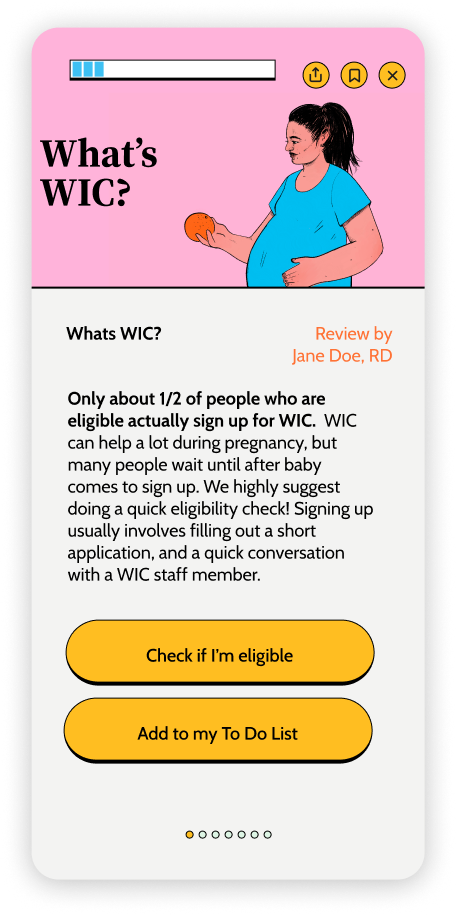
if you want to learn more, you can add a module to your to do list
What do we need financial support with?
There are many ways to approach this project. At its simplest, it can be a focused tool that guides you through building your birth preferences using medically reviewed, plain-language information, something that doesn’t currently exist in the app ecosystem. At its biggest version, it’s a comprehensive platform with culturally specific learning units, multilingual support, and integrations with data from places like The Leapfrog Group. We’d love to explore both the lightweight and expansive versions with you to find the best way to support families.
-
This should be significantly lower than it would be for other app development projects, as we are a small team with deep expertise.
-
We will need to find physicians, nurse midwifes, dieticians, and physical therapists to review appropriate content for accuracy.
-
We need professional spanish translation for units
-
We want to lean on the Kellogg network to find clinics to test with, and to find an equitable means of distributing the app outside of the current 2 models of either ad-based or through insurance
-
We want to collaborate with people with lived experience to write units that you don’t often see in childbirth education, but you should.
-
We are really good at the technology and design part, but we are going to need a group of advisors and reviewers on our design to ensure what we build is serving everyone appropriately.
Our Team Lead
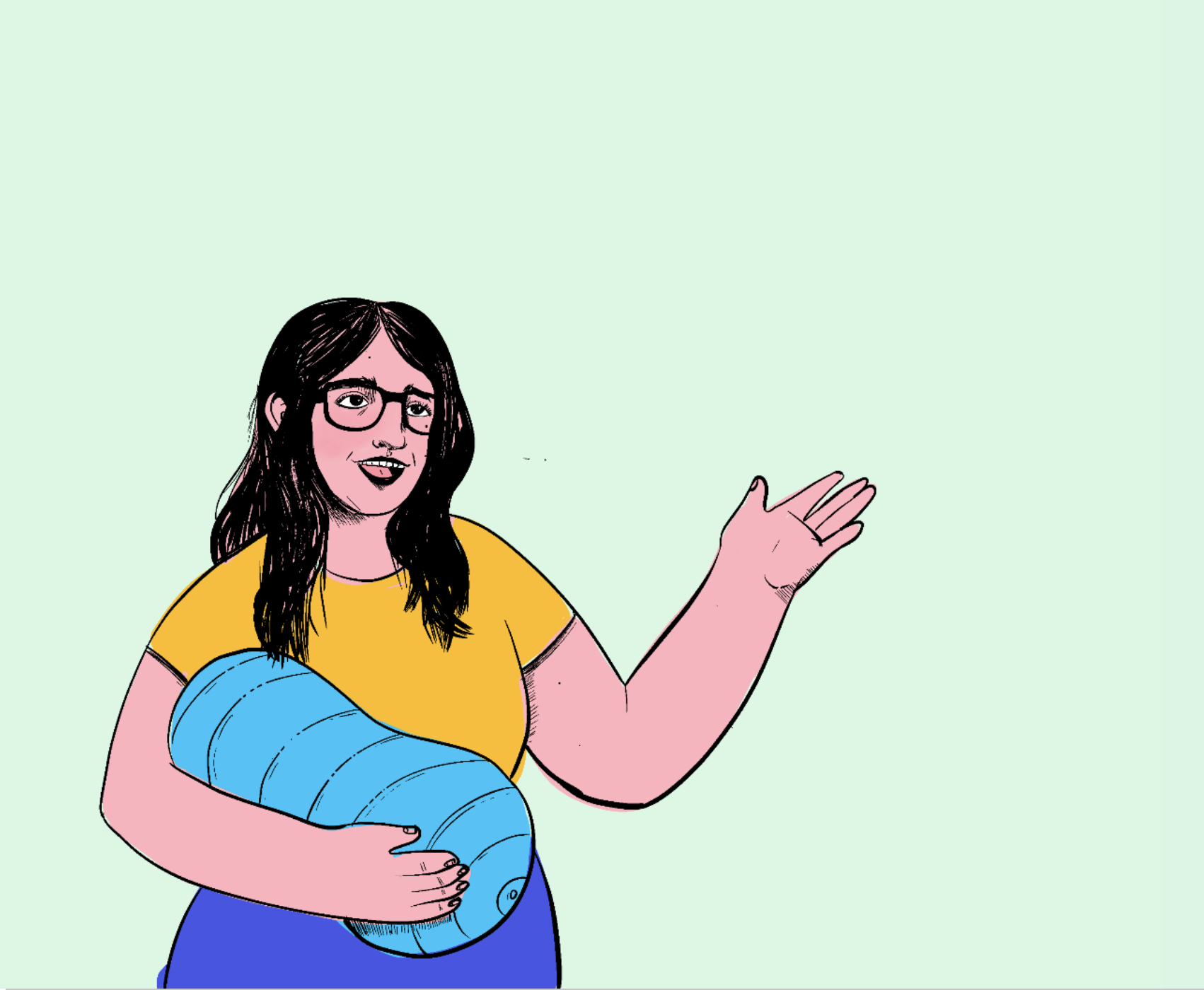
Lauren Cason is a full spectrum doula, lactation counselor, and creative technologist working at the intersection of reproductive health and technology. She is certified through Birthing Advocacy Doula Training (BADT) and the Center for Breastfeeding Healthy Children Project, with additional training in bereavement, abortion support, childbirth rights, and trauma-informed care. Her training includes the UNM Birth Companion program, and she serves as Co-Chair of the Northern New Mexico Breastfeeding Task Force, supporting families across Northern New Mexico.
Lauren is also an award winning technologist, with experience at studios like Us Two and companies like Apple. She is the co-founder of Refract Studio, an award-winning New Mexico-based studio that has delivered interactive and digital projects for clients including IKEA, Google, Snap Inc, and public institutions across the state, including the Cities of Albuquerque and Santa Fe.
In 2025, she co-led, alongside technologist Akilah Martinez, the development of Yeigo, a Diné language first technology that helps users correctly fit a walker. The project won first place at the MIT Reality Hack and MIT Founder’s Lab.
She has been recognized as a Forbes 30 Under 30 honoree and a New Mexico Women in Technology Honoree. Her work centers on building technology informed by real world care delivery, addressing gaps between clinical systems and the tools patients are given to navigate them.
Thanks for Reading
We hope we get to talk with you soon about how we could improve digital pregnancy education for New Mexico families and beyond!